

.
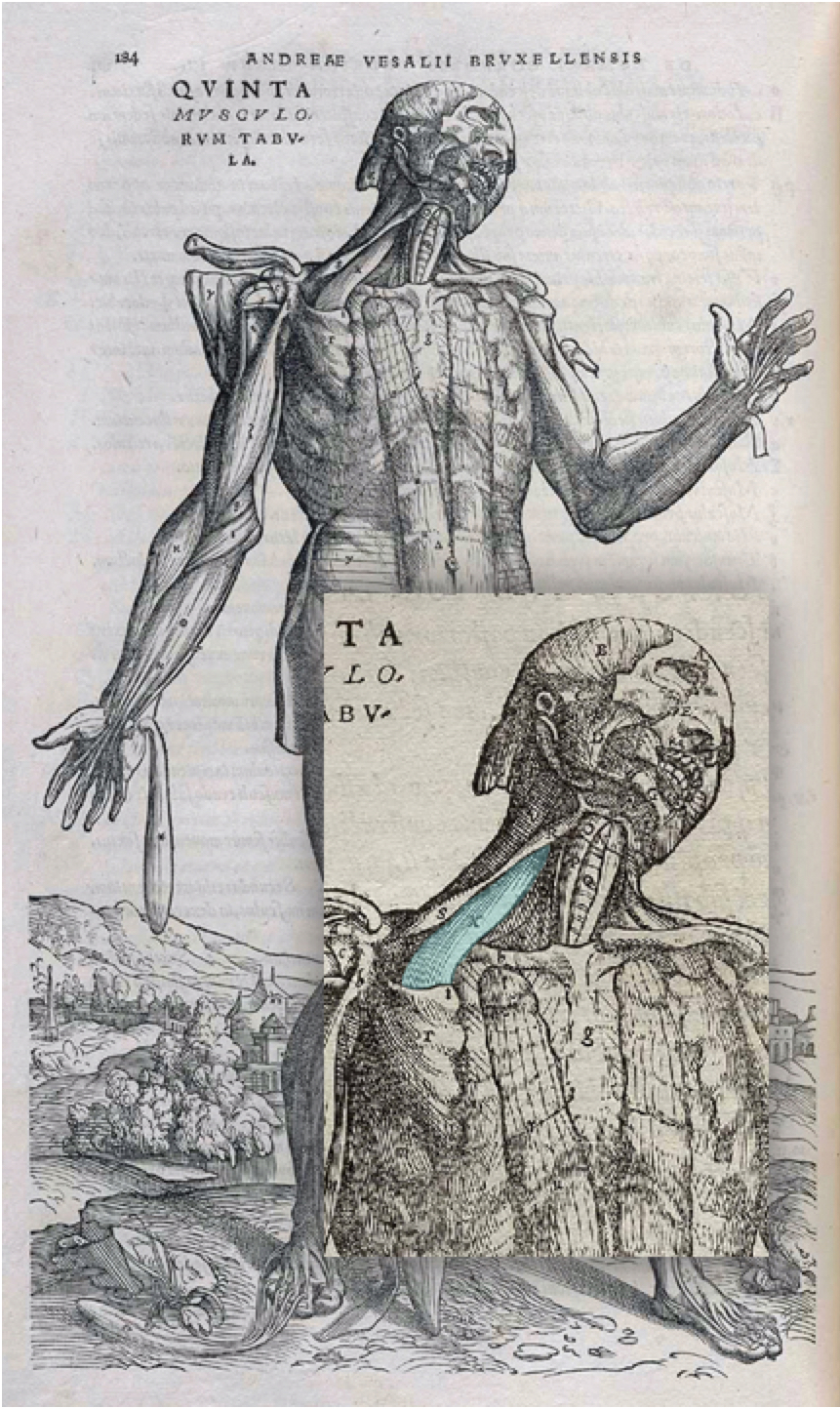
Anatomical Study, engraving by Andreas Vesalius (1514-64)
De Humani Corporis Fabrica Libri Septum (On the Fabric of the Human Body in Seven Books) is one of the most influential works in the history of Western medicine. In it, Vesalius used his knowledge of human anatomy gained through actual human dissection to demonstrate errors introduced by previous authorities in the field, principally the animal-based studies of the ancient Greek physician Galen. In the accompanying illustration, Vesalius indicates a canine neck muscle referred to in Galen which does not, in fact, occur in humans (see inset).