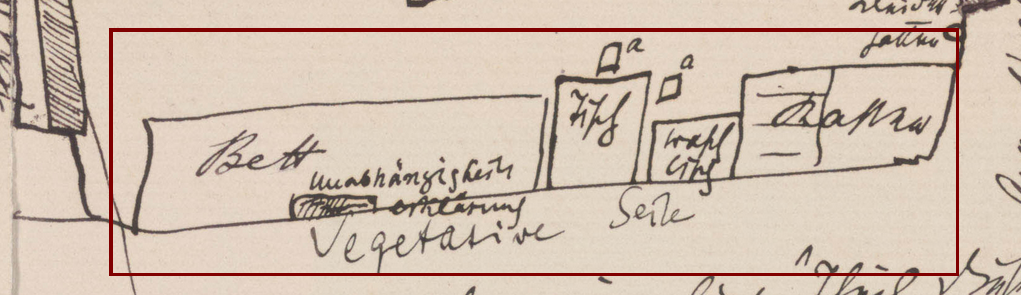
Drawing of Freud’s Room in Vienna

This drawing—like many of Freud’s drawings appended to a letter, in this instance to his fiancée, and later wife, Martha (October 1883)—records the organization of his studio apartment in Vienna. Following Aristotle, Freud whimsically divides the room into two wings: the vegetative side, where he located everything he deemed important for living functions (sleeping, eating), and the animalistic side, where he grouped what he considered to be the “higher animal functions” of writing, reading, and thinking. The room, which he describes as “a cave” (Höhle), belongs to a series of architectural plans drawn by Freud—including Jean-Martin Charcot’s library in Paris (1885) and the organization of another two-bedroom apartment in Vienna (1884)—that were fundamental to the way the space of his private clinic would later be conceived. Freud would eventually organize the psyche, as well as other psychoanalytic concepts, along similar lines meant to distinguish the inside from the outside, differentiate the familiar from the uncanny, and calibrate a catalogue of anxieties and their ensuing symptoms.
Keep scrolling to explore this image in more detail.
Figure 1
The animalistic side (Animalische Seite) is located at the top of the drawing.
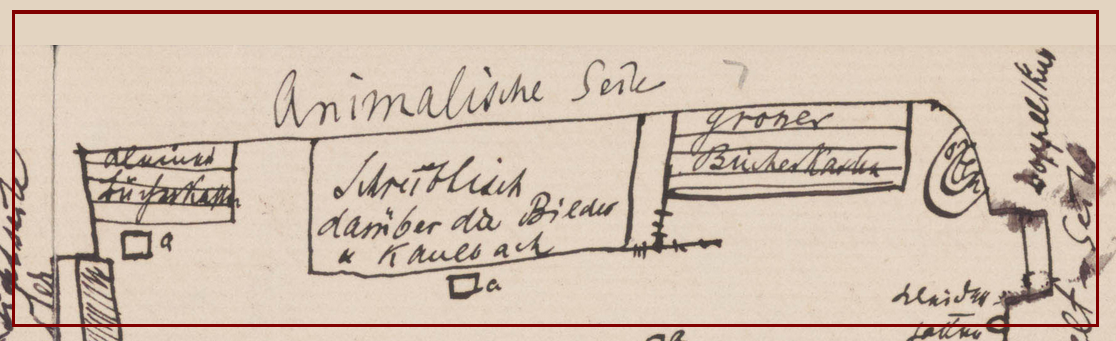
Figure 2
Freud draws a small bookshelf (Kleiner Bücherkasten) in the left corner.
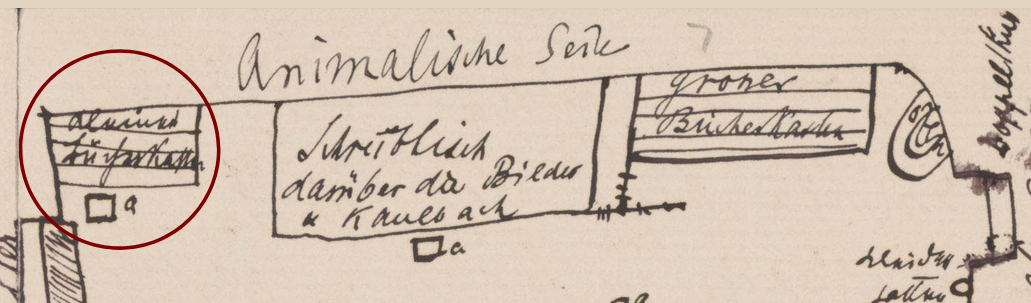
Figure 3
Adjacent to it is a writing desk (Schreibtisch) below a painting by the artist Wilhelm von Kaulbach.
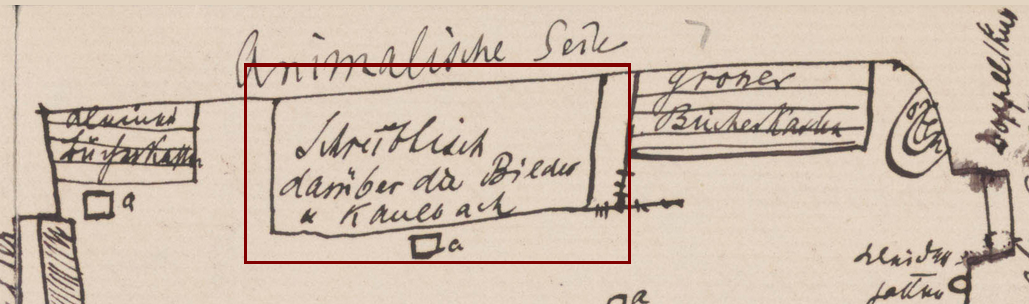
Figure 4
A larger bookcase (Großer Bücherkasten) is in the far-right corner.
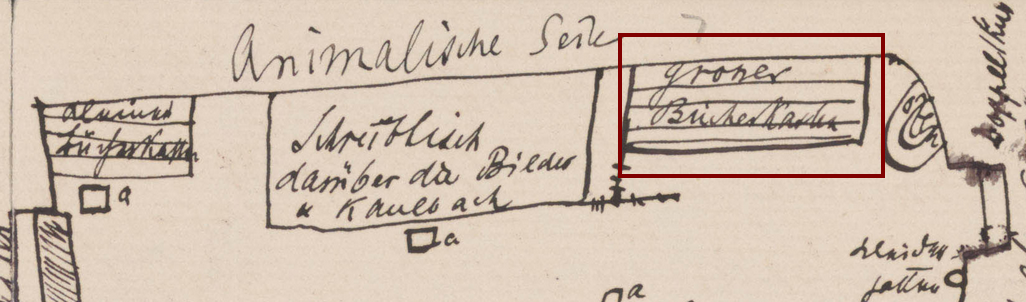
Figure 5
Under the lefthand window is an additional table belonging to the famous neurologist Theodor Meynert.
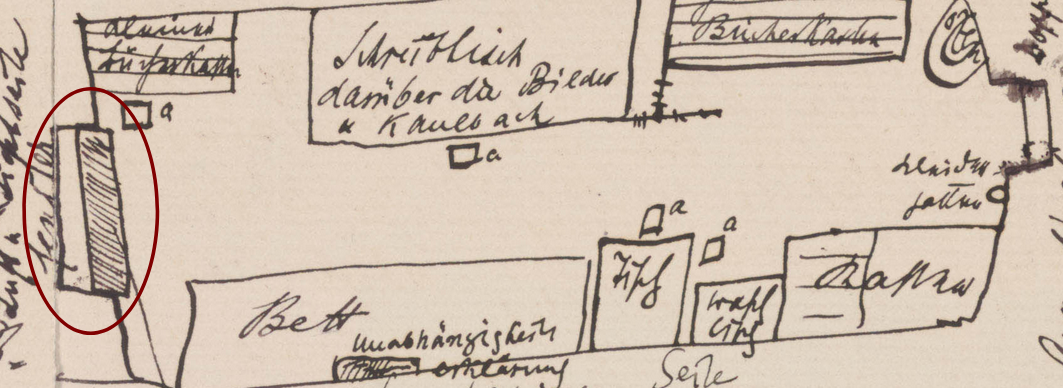
Figure 6
An oven (Ofen) and closet (Kleider-halter) flank the entrance to the room on the rightmost wall.
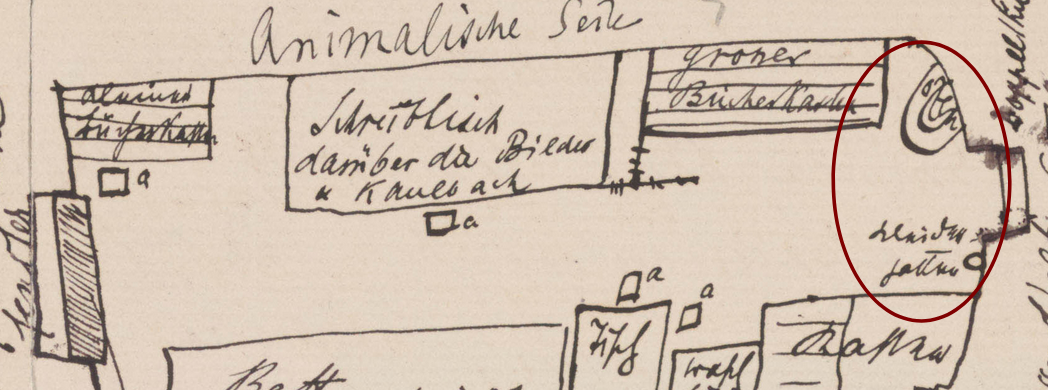
Figure 7
The vegetative side (Vegetative Seite) includes a bed, a copy of the American Declaration of Independence, a washbasin (Waschtisch), and a chest of drawers (Kasten) in the lower right-hand corner.